
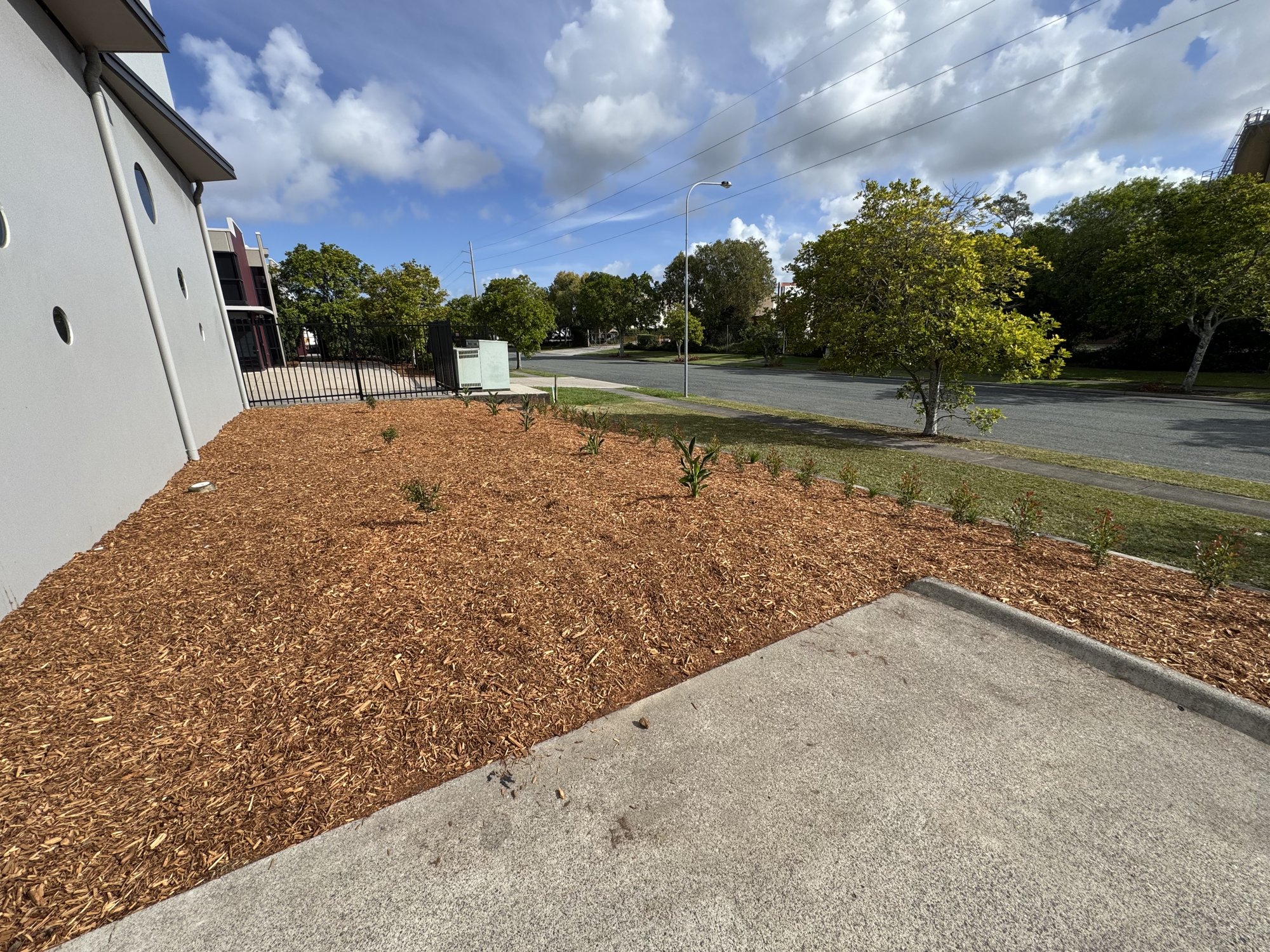
Most industrial units have the same problem strip: a bare, patchy bank between the wall and the turf that was never planted, or was planted once and left. It never looks finished, it grows weeds, and it’s the first thing a prospective tenant sees. A native bed done properly fixes it for years, not months.
Why natives on an industrial site
Industrial estates on the Sunshine Coast are hot, exposed and usually unirrigated. Ornamental plantings burn off or need watering that nobody is going to do. Natives like lomandra, dianella, westringia and the smaller grevilleas and callistemons are selected for exactly those conditions: full sun, poor soil, no irrigation once established, and a tidy habit that holds its shape between visits.
They also cost less to maintain. Fewer feeds, less pruning, and a mulch top-up once a year instead of a replant every second spring.
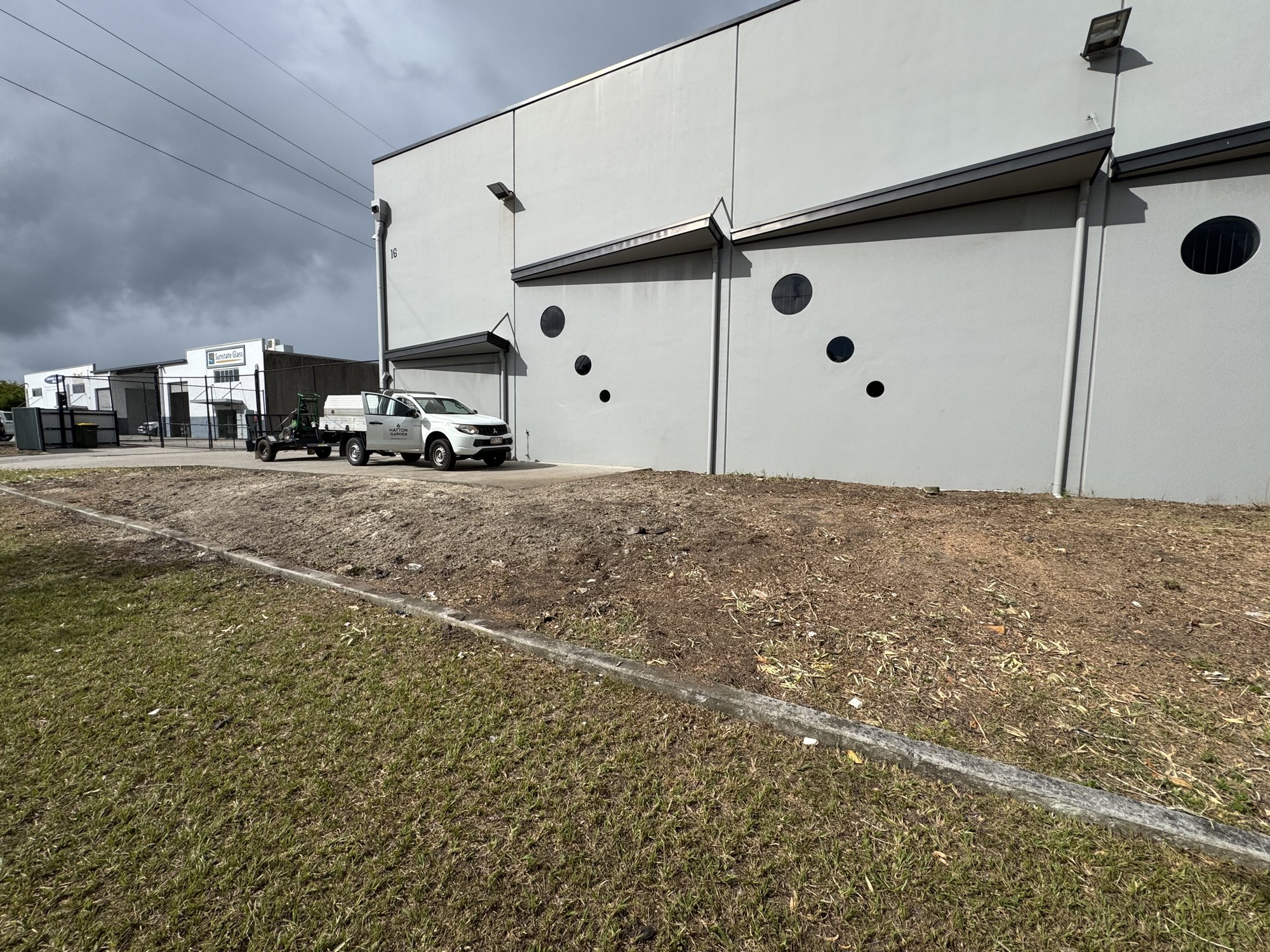
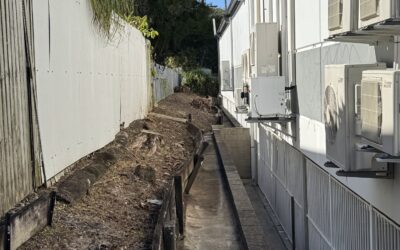
Before — a bare, patchy bank along the wall.
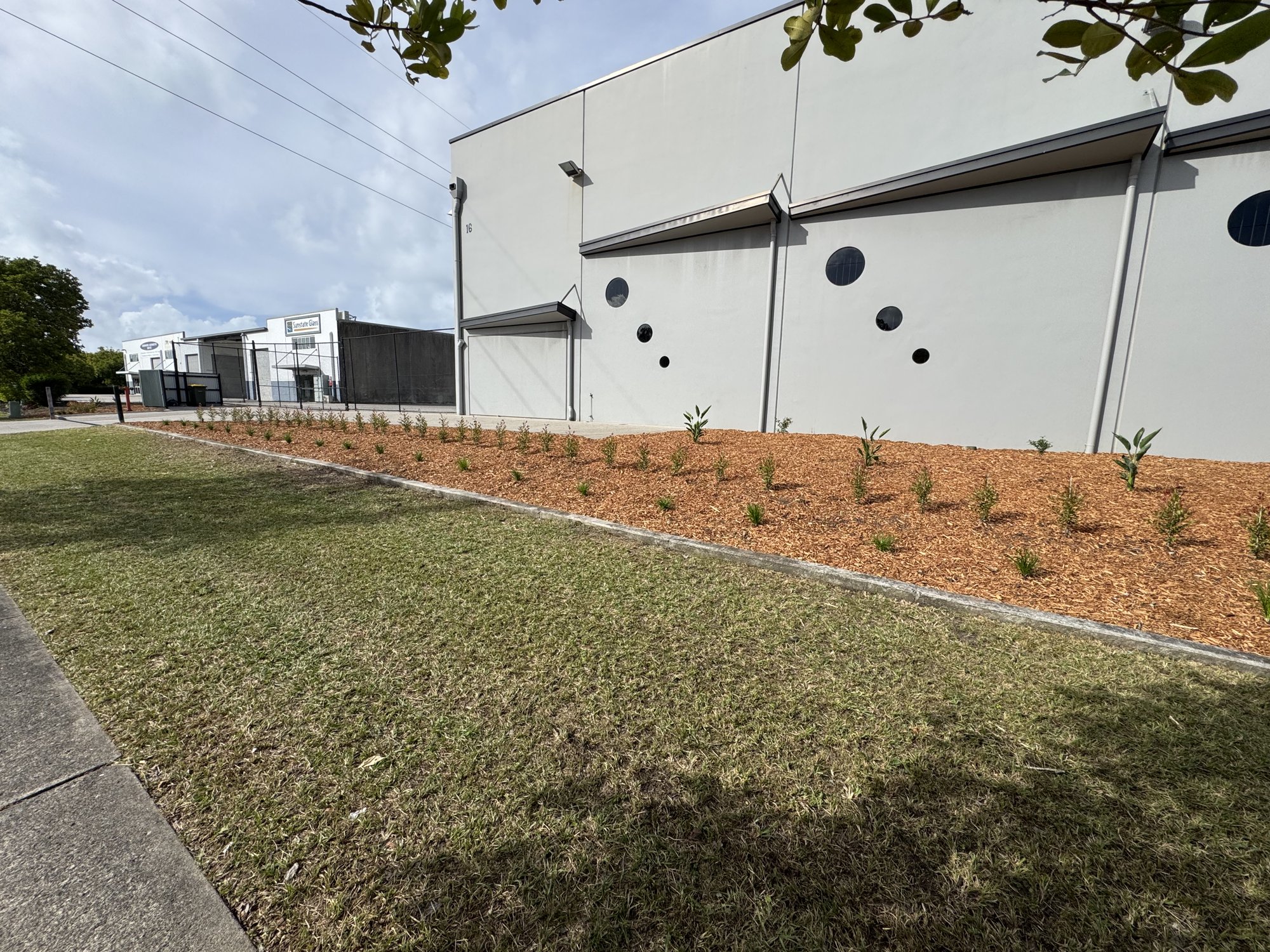
After — bed cut, planted to spacing and mulched.
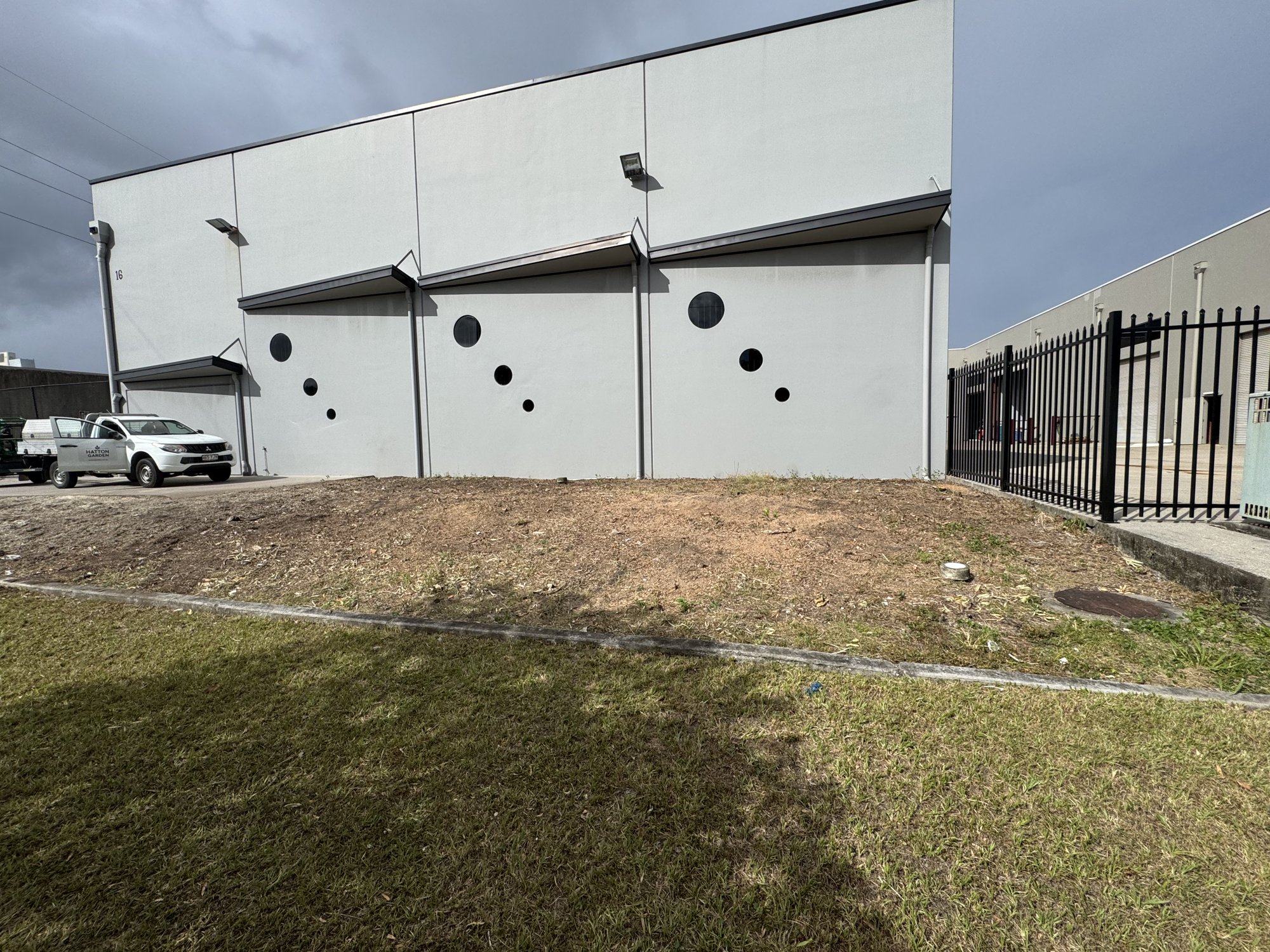
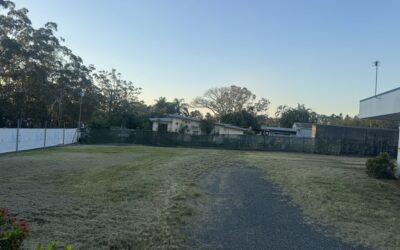
Before — front angle, nothing to define the frontage.
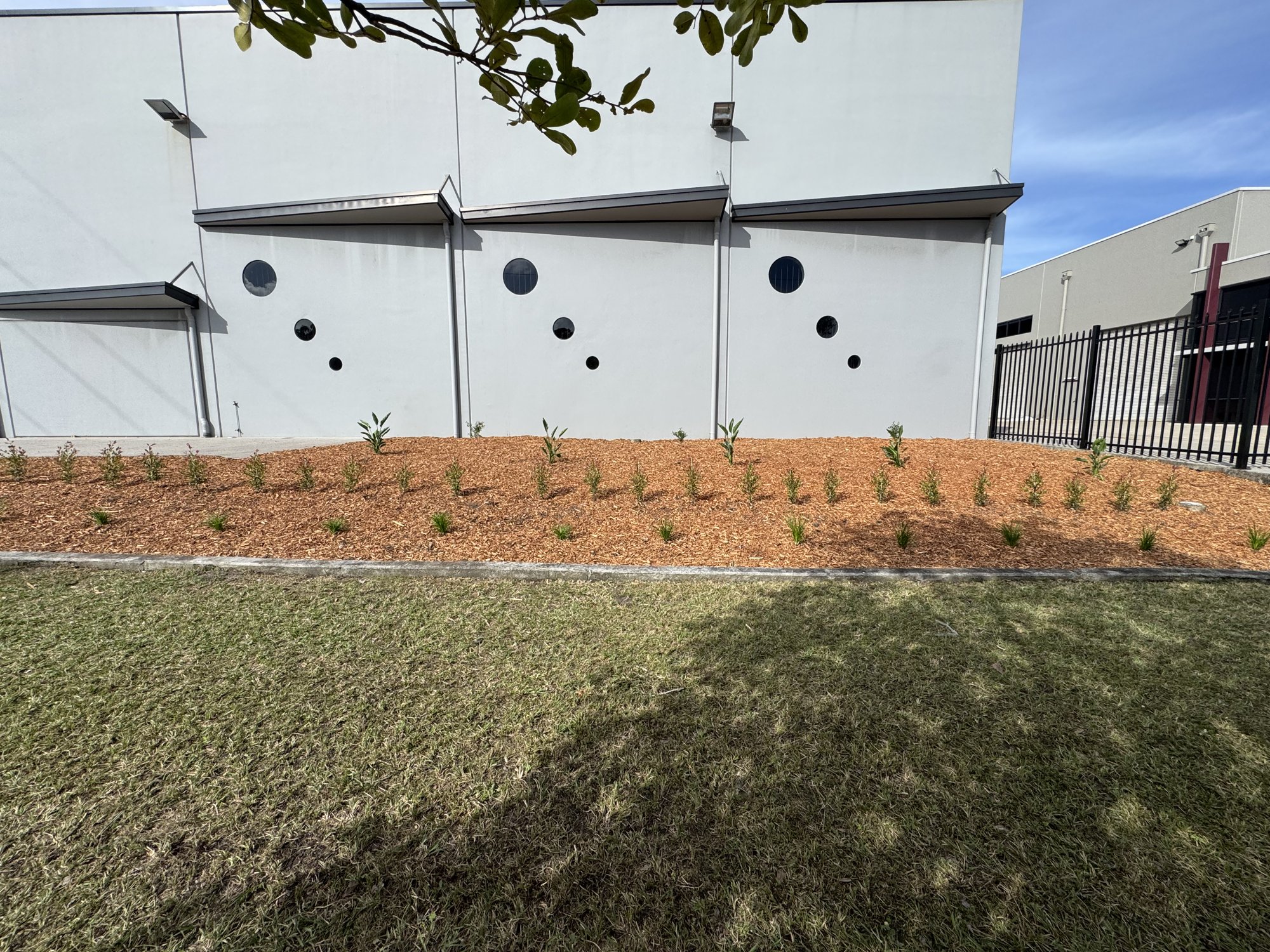
After — clean lawn edge against the mulch.
How the bed is built to stay low-maintenance
Bed line and edge
The bed line is cut straight and deep, then edged against the turf. That edge is what stops kikuyu creeping into the mulch and is re-cut on routine visits so it stays crisp. A bed without a real edge is a weed bed within a season.
Plant choice and spacing
We plant to mature spacing rather than for instant cover. It looks a little open on day one and looks right in six months, and it means the plants don’t need to be thinned or hacked back later. Species are matched to aspect: the harder, hotter, more exposed the strip, the tougher the selection.
Mulch depth
Mulch goes on at 50–75 mm. That depth is what suppresses weeds and keeps moisture in the root zone through summer. Thinner than that and it’s decorative; thicker and it starts to rot stems. Mulch is kept clear of hydrants, pits and meter access.
Ongoing
After establishment the bed needs a weed check on routine visits, a light prune once or twice a year to hold shape, a low-phosphorus native feed if it’s looking tired, and a mulch top-up annually. That’s it.
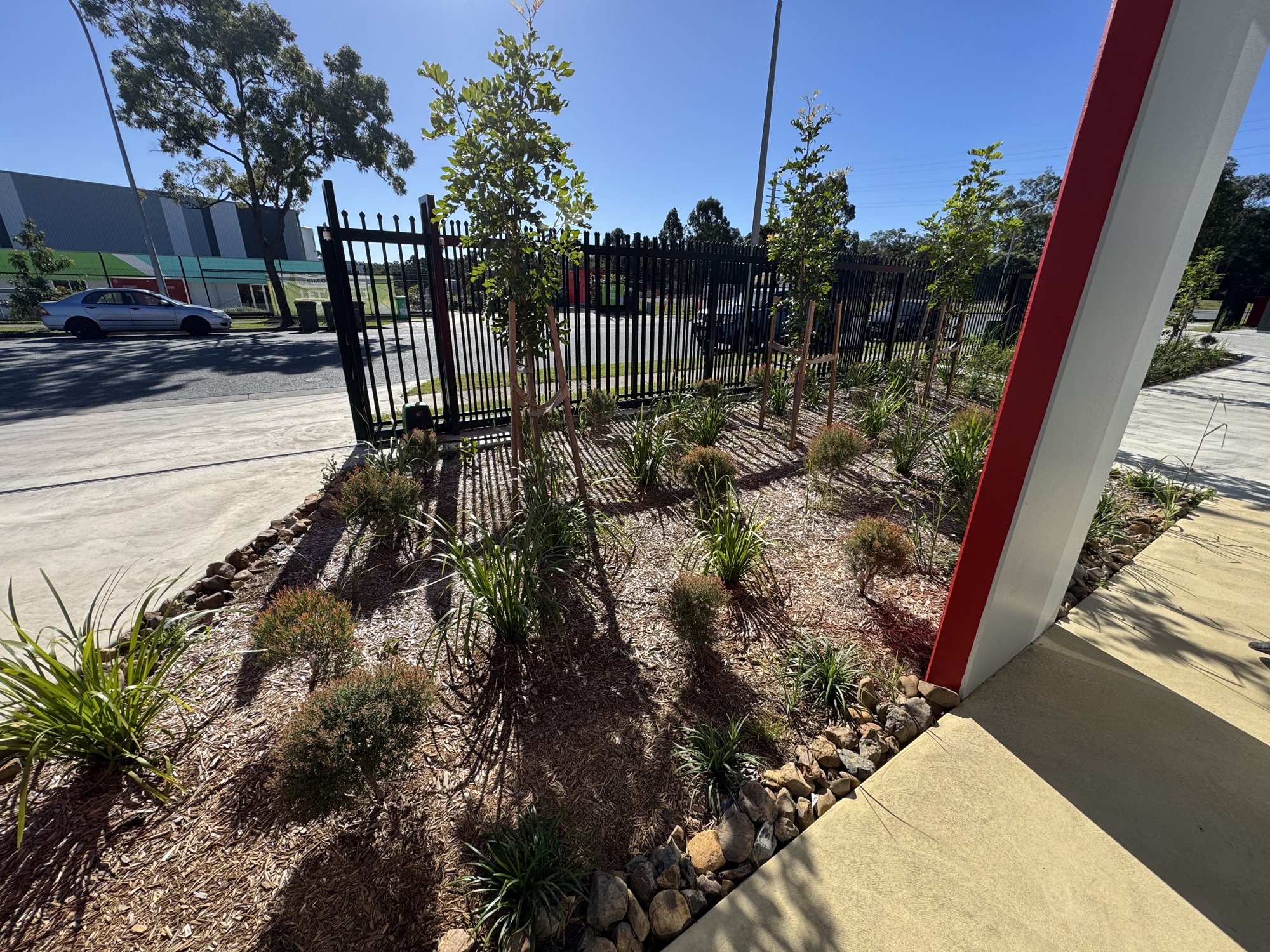
An established native bed at an estate gate: pebble-edged, holding its shape, a weed check per visit.
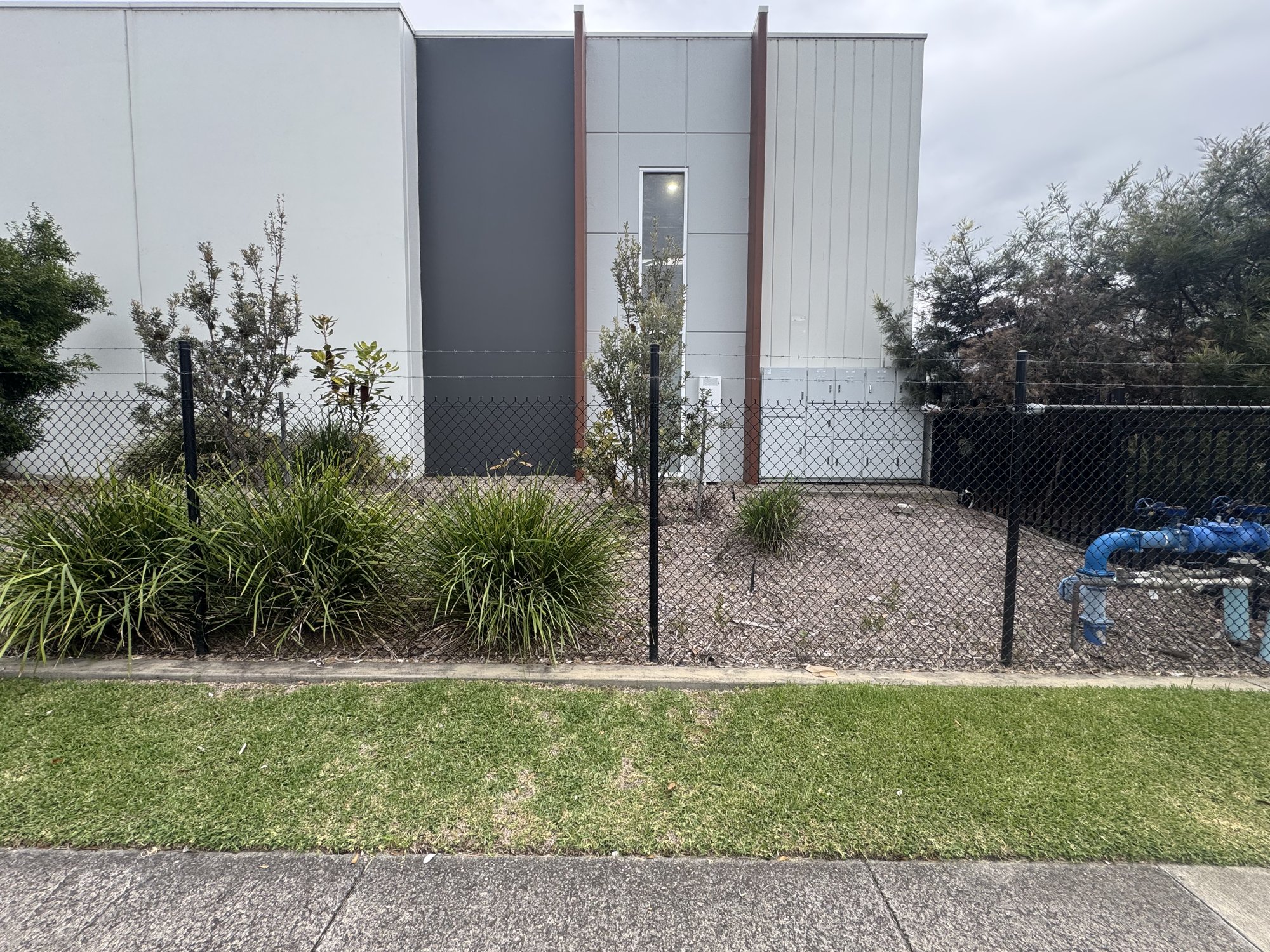
Lomandra and natives at a unit frontage, mulched and edged, no irrigation.
What it costs to keep
The install is a one-off. After that, bed maintenance folds into the routine grounds visit rather than being a separate line item, and the mulch top-up is a small annual job. Compared with a strip that gets sprayed, re-weeded and re-mulched every few months because it was never planted, a native bed is cheaper by the second year and better looking from the first.
Get a garden bed quote
Send us a photo of the strip. We’ll quote the bed install and, if you want it, a maintenance program so it stays looking like the after photo.
Related: Garden beds that stay tidy · Garden Bed Maintenance & Mulching
Helpful links: Services · Commercial Grounds Maintenance
FAQs
Do native beds need irrigation?
Watering in at planting and through the first dry spell, then generally not. Species are chosen for unirrigated sites.
How long until the bed looks full?
Planted to mature spacing, most native beds close over in six to twelve months depending on season.
Can you do this on a body corporate or strata site?
Yes. The same approach suits strata common property, driveways and street frontages.

0 Comments