
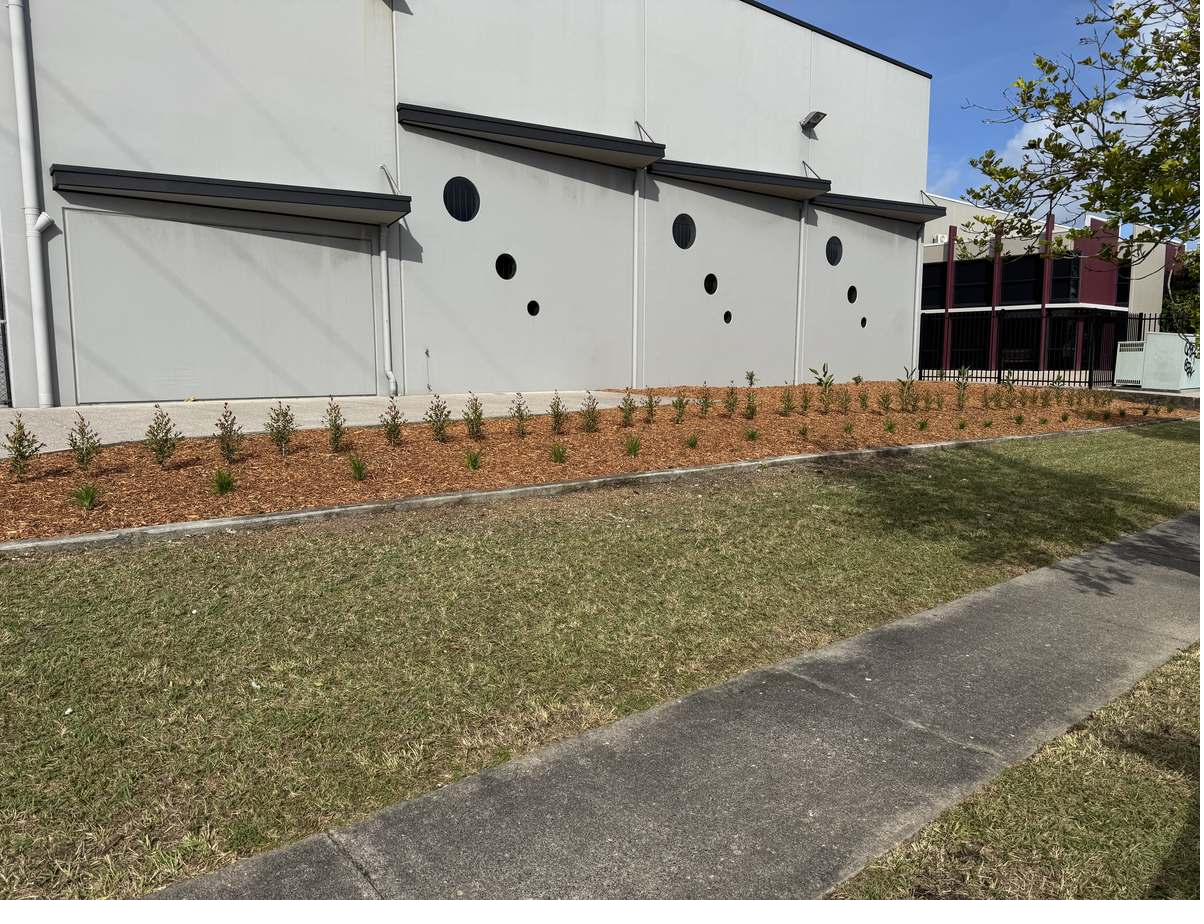
Bed presentation drives most of the “it looks messy” complaints. A simple three-part plan — weed control, fertilising, mulch — keeps beds looking intentional rather than overgrown.
The three-part plan
Weed control: Prioritise mechanical methods: hand pulling, hoeing, cultivation. Use targeted, label-compliant herbicides only where mechanical isn’t feasible, such as rooted perennials or trip-risk cracks.
Fertiliser: Slow-release feeds deliver steady colour and growth without flushes. Match rates to species and season, and water in where required.
Mulch: Maintain 50-75 mm depth. Mulch suppresses weeds, buffers soil temperature and reduces irrigation demand. Top up before peak heat.
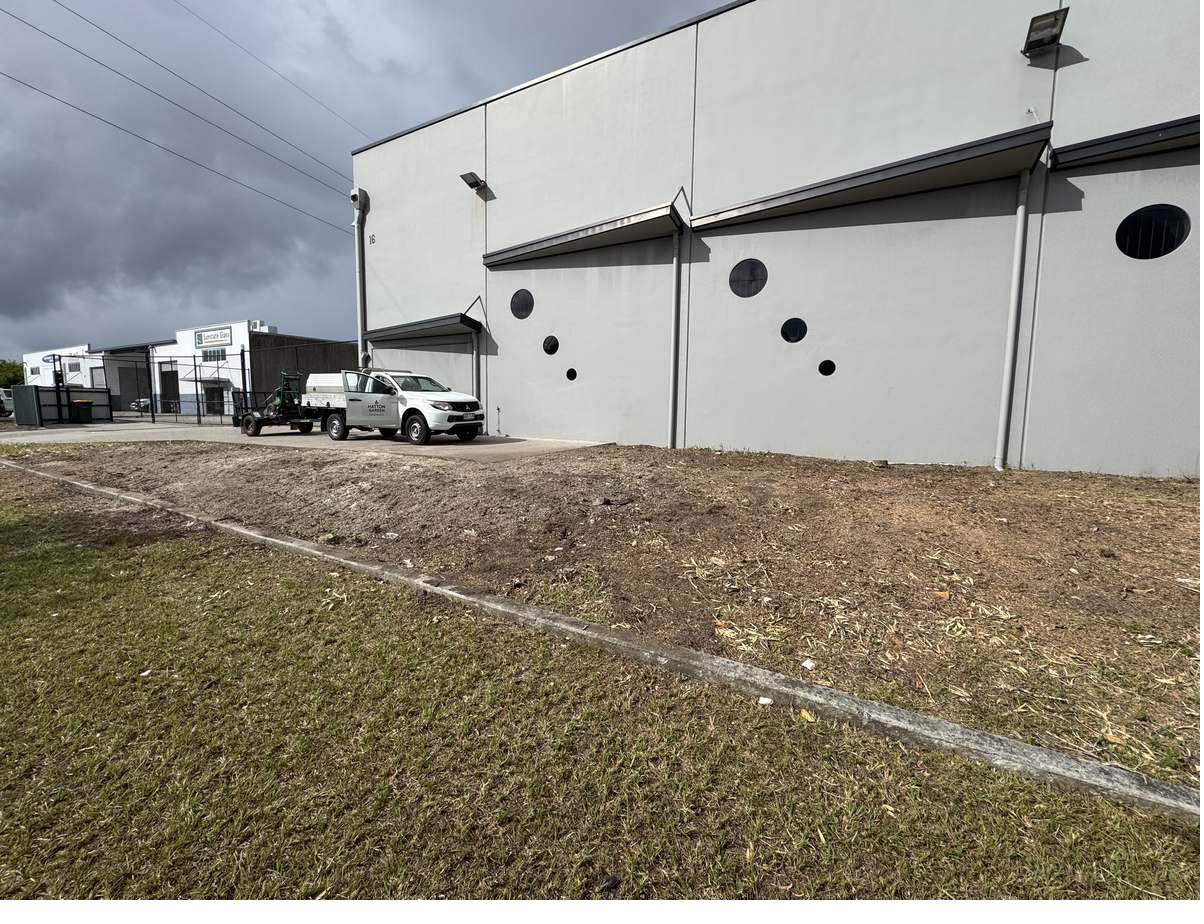
Before — bed line cut and prepared.
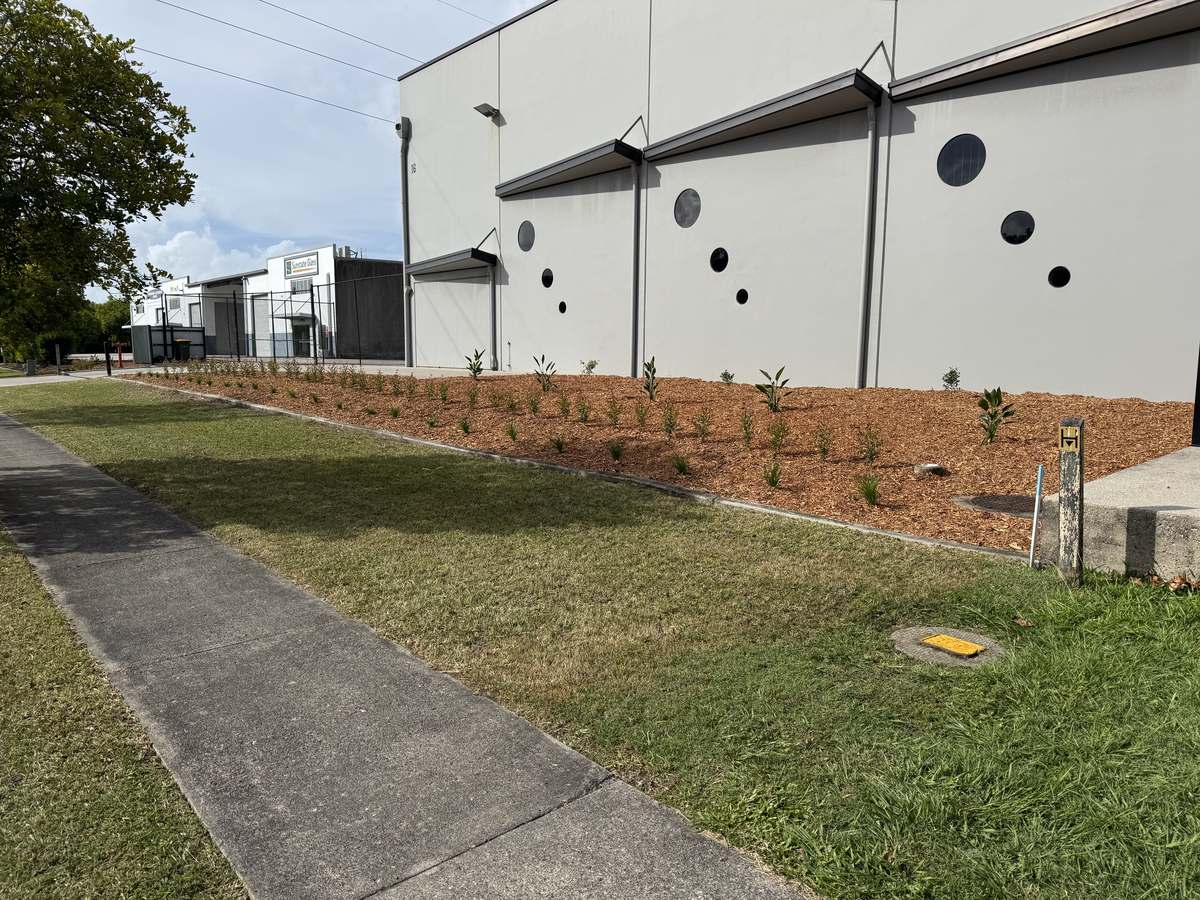
After — planted to spacing and mulched to specification.
Mechanical vs selective control
Mechanical first protects sensitive areas and residents. Where you must spray, use shields, apply in still conditions and sign high-traffic zones. Record product, rate, location and weather.
Fertiliser timing & rates
- Flowering shrubs: light feed in late winter or early spring, top-up mid-season.
- Hedges: small, regular feeds to maintain dense growth.
- Natives: often low-phosphorus blends, so avoid over-feeding.
Mulch depth and top-up frequency
Check depth quarterly. Top up annually, or sooner after heavy weed removal or soil works. Keep mulch clear of trunks and stems to prevent rot, and clear of hydrant and pit access.
Edging and bed definition that lasts
Crisp spade-cut edges or stable strip edging prevent grass creep and give beds a finished look. Re-cut seasonally or as part of your fortnightly visits.
Photo logs & seasonal reviews
Photos of key beds help committees see progress and justify mulch and fertiliser spend. Seasonal reviews align works with flowering cycles and peak visitor periods.
Get a fixed-price bed program
We’ll map beds, set a mulch and fertiliser calendar, and fold weed control into your routine visits.
Helpful links: Services · Commercial Grounds Maintenance
FAQs
How often should mulch be topped up?
Typically annually. Check for 50-75 mm depth.
Can you use low-noise tools?
Yes, standard practice on our crews.



0 Comments